
Updated: June 12, 2026
Author: Alvin Villanueva, PMP®, PMI-ACP®; Editor: Geram Lompon; Reviewed by: Grace Payumo, PMP®
You know that sinking feeling when your perfect project plan starts to fall apart; deadlines slip, project team members stop talking, and the rules you thought would keep everything on track feel like they are holding you back instead of pushing your project team in the same direction.
You are not alone. Modern project professionals quickly discover that merely executing rigid administrative processes is insufficient for predictable delivery; transitioning from a reactive task manager to an adaptive, strategic leader requires the advanced governance frameworks mastered in PMP® certification training.
Sometimes, you need bold steps to turn chaos into progress and doubts into wins, ensuring your whole project stays on track and your project stakeholders remain engaged (Kerzner, 2017).
In this guide, you will learn how to spot when rigid
You will find practical strategies to lead high-performing teams to outcomes they previously thought were impossible, all while staying true to your integrity and purpose (PMI, 2021).
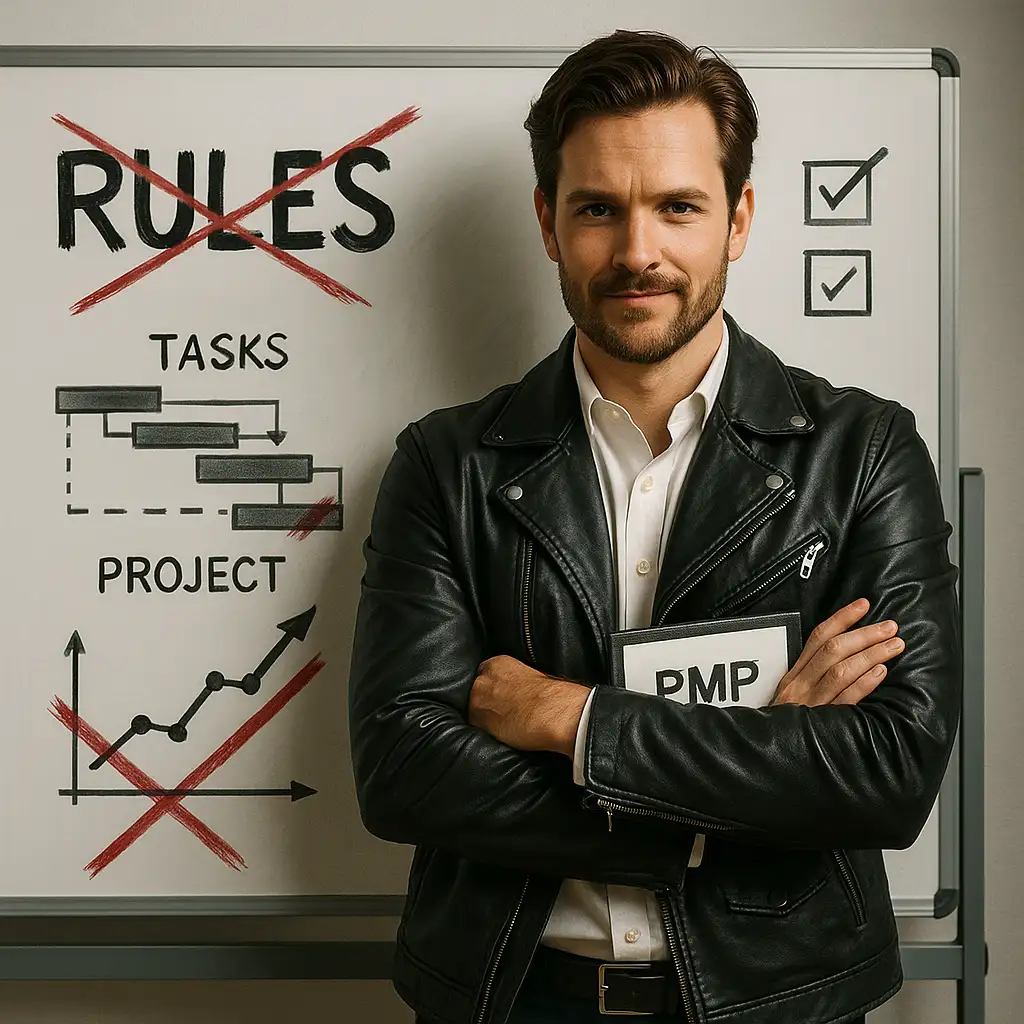
Why the Rules Do Not Always Work in Project Leadership
You have been told that if you follow Agile, Waterfall, or a new hybrid approach, your project will practically manage itself. However, reality has a way of derailing even the most well-planned schemes.
Requirements change, project documents become outdated, project scope creeps, and political roadblocks appear – problems that no checklist can predict. This traps you in a rigid project process that punishes creativity instead of nurturing it (Kerzner, 2017).
That is why great project managers develop leadership skills beyond the textbook, questioning assumptions and adapting to the unique project environments. Rules were not made for your specific project; they were made for someone else’s ideal scenario.
Smart project leadership theory suggests that adjusting your leadership style and decision-making approach can transform obstacles into opportunities, a critical paradigm shift required when organizations actively seek to develop agile leadership capabilities across their management tiers.
Quick Exercise: Think of a recent frustration in your project tasks. Did a rule or process become an obstacle? Jot down one small experiment you could adapt or skip next time to improve project efficiency.
Rebel Moves for Managing Projects
You do not need to discard the entire work breakdown structure; sometimes, you may need to modify it. However, you do need the courage to skip steps that add no value, such as standing meetings that waste everyone’s time. Instead, use
Building alliances beyond formal roles, such as collaborating directly with IT or finance outside the chain of command, can quietly clear blockers before they become significant.
These moves help maintain momentum across multiple projects and demonstrate that you prioritize project outcomes over paperwork, proving your ability to deliver projects that meet or exceed their goals.
How to Win Key Stakeholder Trust with Bold Moves
Picture someone crossing their arms and questioning whether your unconventional approach will derail the project schedule. That is when your calm confidence must shine.
Share small wins early, highlight critical path activities you completed ahead of schedule, and show how your decisions have a positive impact on project outcomes.
Invite concerns from your project stakeholders, explaining how flexible strategies reduce risks instead of creating them—frequently leaning on a structured PMI stakeholder analysis to proactively map out and address their specific anxieties before they escalate (PMI, 2021).
By fostering two-way communication, you will transform skepticism into support and build stronger stakeholder relationships.
Quick Tip: Before your next status meeting, select one key milestone to highlight. Sharing timely project progress helps build credibility and keeps everyone on the same page.
When to Follow the Rules in Project Delivery
Smart rebellion has its limits. Some rules exist to protect safety, comply with laws, or maintain essential quality standards. Knowing which
When your project drifts into dangerous territory, pause improvisation and rely on proven
Great project managers understand that agility means knowing when to adapt and when to follow processes closely, thereby protecting the whole team and delivering successful project outcomes—an elite level of situational awareness that becomes significantly easier to master when you accelerate your strategic leadership capabilities by initiating a risk-free 7-day trial of our comprehensive PMP® certification training.
Embrace the Rebel Mindset for Future Projects
You are not here to tick boxes; you are here to inspire project team members, identify risks before they escalate, and adapt as your project environment changes. By challenging outdated steps and proposing adaptations where necessary, you create an environment where new ideas flourish, obstacles are overcome, and the entire project team feels empowered to succeed.
Embracing the rebel mindset does not mean ignoring structure; it means using the right tools to reshape it so your next project meets deadlines and stays aligned with your project schedule. By clearly defining manageable tasks in your work breakdown structure and monitoring progress, you ensure that everyone is working towards the same goal.
Remember: great project managers do not just follow plans; they redefine what is possible, one bold move at a time.
Quick Challenge: Think of a specific project where you were too rigid. How can you adjust your approach by modifying your leadership style or fostering more effective two-way communication to make future projects smoother?
References
Kerzner, H. (2017).
Project Management Institute. (2021). A guide to the
Turner, J. R. (2016). Gower handbook of